FREE SHIPPING over 100!

*Excludes oversized items, AK, HI, & foreign address. Read more...

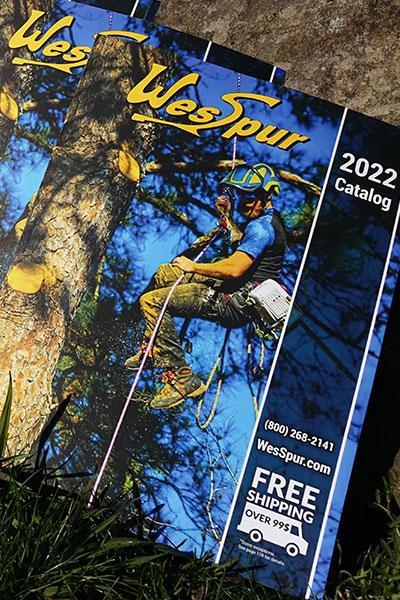
FREE arborist catalog

FREE Arborist Catalog

Get yours here

Questions?

Friendly crew & on-staff ISA certified arborists provide speedy answers to your gear questions

Customer Service: (800) 268-2141

M-F 7AM to 5PM Pacific

Contact us online 24/7 here

 
Items, $ Total
Shoping Cart Image View Cart or Checkout
"A real professional business."
Ralph - Saucier, MS

A Satisfied Customer
Read more...

The WesSpur Guarantee

Expert Gear Advice

Over 24 years in the arborist supply business and on-staff arborists to aid in gear selection.

The Best Prices - PERIOD.

We have the best prices, but if you find someone who undercuts us we will price match on the spot.
Read more...

Great Service

We have a fully stocked warehouse with a great crew to make your order as smooth as possible.

Choosing an Arborist Block or Pulley

There are dozens of pulleys and blocks available for the use of arborists today. However not all are created to the same specifications, and there are many applications which will put high demand on the hardware and for which only certain blocks should be used. While the terms "block" and "pulley" are largely interchangeable, we have divided them into two main groups for clarity:

  • (1) Arborist Blocks
  • (2) Pulleys

Arborist blocks are built to sustain shock loading a situation where the load free-falls momentarily before being caught by the block. This places far more force on the hardware than normal lowering, therefore only arborist blocks should be used in such situations. Arborist blocks have widened cheek plates to protect the rigging line from abrasion against the tree. Arborist blocks also have an upper sheave to safely attach a rigging sling.

Pulleys are excellent tools for lowering static loads. They are not manufactured to handle shock loading and for these reason are often cheaper than arborist blocks.
The relatively narrow cheek plates on a pulley may expose the rope to abrasion, so care should be taking that the line does not rub against the tree when rigging with a pulley. Most pulleys have carabiner holes in the upper body rather than an upper sheave, and so the rigging sling can not be tied directly to the pulley, and a shackle or clevis is necessary for safe operation.

Other factors to consider when choosing a block or pulley are:

Rope Diameter Capacity -- Blocks may be safely used with rope sizes up to the max. diameter capacity.
Sheave Diameter -- The wider the sheave diameter, the less it will reduce the breaking strength of the rope or sling.
Working Load Limit (WLL) -- Working Load Limit is the maximum load the block is intended to handle. The percentage of breaking strength that constitutes the WLL is different from one manufacturer to another, but is generally 20 -25%.
Breaking Strength (Brk Str) -- This is the weight at which the device fails under test conditions.
Bearing vs. Bushing Bearings are more expensive than bushings, but are more efficient and are sealed against dirt and sawdust. In practical terms, they have identical strength properties.

For an excellent review of blocks and pulleys, check out Don Blair's Arborist Equipment Guide.

Contents of this site are copyright 2010 by WesSpur Tree Equipment, and may not be used without written permission.
McAfee SECURE sites help keep you safe from identity theft, credit card fraud, spyware, spam, viruses and online scams